
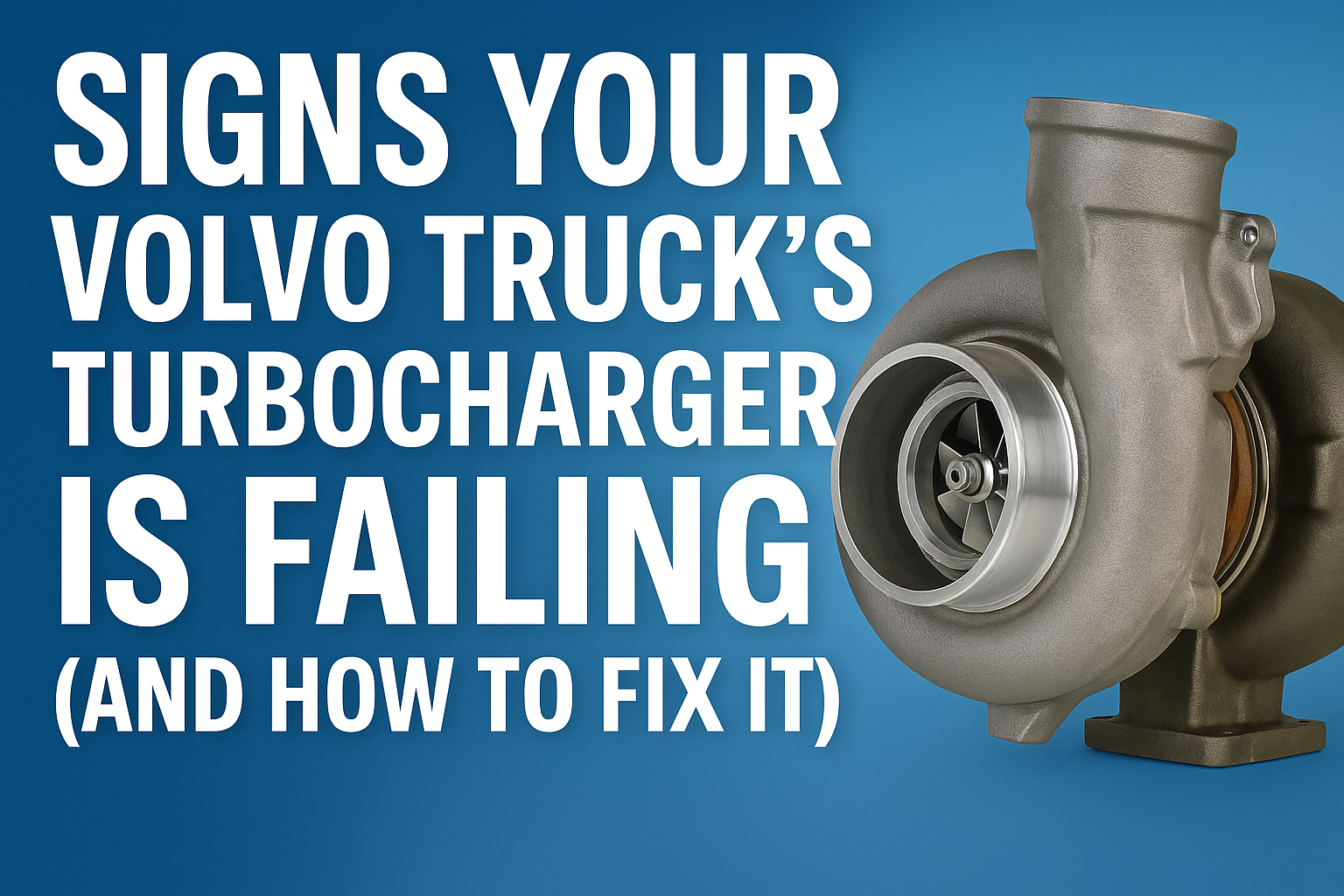
Volvo Truck Turbocharger Failure – Symptoms, Causes, Repairs, and Prevention
Introduction – Why Volvo Truck Turbocharger Health Matters
The turbocharger is one of the most critical components in a Volvo heavy-duty truck. It’s responsible for delivering more air to the engine, increasing power output, improving fuel efficiency, and reducing emissions. When a turbocharger fails, the impact is immediate and severe—power drops, fuel consumption rises, and engine life may be compromised.
This guide covers everything you need to know about Volvo truck turbocharger failure, from early warning signs to prevention strategies, ensuring your Volvo D12, D13, or D16 remains on the road and performing at its best.
Understanding How a Volvo Turbocharger Works
A turbocharger harnesses exhaust gases to spin a turbine connected to a compressor. This compressor forces more air into the engine, enabling a more complete combustion process. Volvo truck turbos, especially in the D12 and D13, are carefully matched to engine specifications to deliver optimal torque and efficiency.
Key Components:
-
Turbine wheel & housing – Driven by exhaust gases.
-
Compressor wheel & housing – Draws and compresses intake air.
-
Bearing system – Lubricated with engine oil to reduce friction.
-
Actuator or VGT mechanism – Controls boost pressure dynamically.
If any of these parts fail, it can trigger Volvo truck turbocharger failure and potentially damage other engine components.
Common Causes of Volvo Truck Turbocharger Failure
Understanding why turbos fail helps you prevent costly repairs:
-
Oil Contamination or Starvation – The number one cause of failure. Dirty oil or restricted oil lines can destroy bearings quickly.
-
Foreign Object Damage – Debris from the intake or exhaust can chip blades.
-
Over-speeding the Turbo – Boost leaks or faulty actuators can cause excessive RPMs.
-
Excessive Exhaust Gas Temperatures (EGTs) – Overheating weakens metal and cracks housings.
-
Long-Term Wear – After 500,000–1,000,000 miles, wear is inevitable.
Early Warning Signs of Volvo Truck Turbocharger Failure
Catching issues early can save thousands:
-
Power Loss – Sluggish acceleration or poor hill climbing.
-
Excessive Exhaust Smoke
-
Blue = oil leak into exhaust side
-
Black = poor combustion due to low air
-
White = coolant leak into combustion chamber
-
-
Whining/Whistling Sounds – Often a sign of worn bearings or air leaks.
-
Check Engine Light – Boost pressure deviation codes like MID 128 PPID 270 FMI 0.
-
High Oil Consumption – Worn seals allowing oil into intake or exhaust.
Diagnosing Volvo Truck Turbocharger Failure
Steps for accurate diagnosis:
-
Boost Pressure Test – Compare measured boost to OEM specs.
-
Shaft Play Check – Inspect radial and axial movement.
-
Oil Supply & Return Inspection – Ensure proper lubrication flow.
-
Exhaust Housing Exam – Look for heat cracks or hot spots.
-
ECU Scan – Identify related sensor or actuator faults.
Common Turbo Problems by Volvo Model
Volvo D12: Known for fewer electronic failures but prone to oil seal leaks after high mileage.
Volvo D13: Advanced VGT (Variable Geometry Turbo) systems improve performance but require actuator maintenance.
Volvo D16: Higher boost pressures mean more power but greater risk of overspeed and heat damage.
How to Fix a Failing Volvo Truck Turbocharger
Minor Repairs:
-
Replace worn boost hoses
-
Reseal intake/exhaust connections
-
Replace faulty actuators
Moderate Damage:
-
Rebuild turbo with OEM-spec kits
-
Replace bearings and seals
Severe Damage:
-
Full turbo replacement recommended
-
Always replace oil feed and return lines with new units
Best Aftermarket and OEM Volvo Turbo Options
-
OEM Volvo Reman Turbos – Best for guaranteed fit and longevity.
-
Interstate-McBee – Reliable aftermarket choice.
-
Garrett/BorgWarner – High-performance options.
Cost ranges from $2,000–$4,000 OEM, with aftermarket sometimes 20–30% cheaper.
Preventing Volvo Truck Turbocharger Failure
-
Use high-quality, OEM-approved oil and filters
-
Replace air filters on schedule
-
Allow engine to idle for 3–5 minutes after heavy loads
-
Avoid aggressive boost tuning
-
Inspect turbo and boost system every 200,000 miles
How Volvo Turbochargers Compare to Competitors
-
Volvo vs. Cummins ISX – Volvo turbos offer smoother torque delivery.
-
Volvo vs. Detroit Diesel DD15 – Volvo’s integration with emissions systems is more advanced but more maintenance-intensive.
Real-World Case Study – Volvo D13 Turbo Replacement
A fleet running Volvo D13 VNL trucks noticed a 0.5 MPG drop and increased black smoke. Diagnostics revealed worn VGT actuators and pitted compressor blades.
Repair: New OEM turbo, flushed oil lines, new air filters.
Result: Restored power, improved fuel economy, reduced emissions.
FaQ
What are the signs of Volvo truck turbocharger failure?
Power loss, smoke, whining noises, high oil use.
Can I drive with a bad turbo?
Not recommended; it risks severe engine damage.
How much does it cost to replace a Volvo truck turbocharger?
$2,000–$4,000 for OEM units.
How long does a Volvo turbocharger last?
500,000–1,000,000 miles with good maintenance.
What causes turbo failure in Volvo trucks?
Oil issues, debris, overheating, and wear
For engine performance comparisons, see our Volvo D12 vs D13 guide.
Conclusion – Keeping Your Volvo Turbo Healthy
A well-maintained turbocharger keeps your Volvo truck efficient, powerful, and emissions-compliant. Recognizing early signs of Volvo truck turbocharger failure, addressing issues promptly, and sticking to preventive maintenance will help avoid costly downtime.
